
Killing Two Birds with One Stone: Drones, Convolution Neural Network and Reinforcement Learning for Disaster Response: By Lekan Sodeinde
Killing Two Birds with One Stone: Drones, Convolution Neural Network and Reinforcement Learning for Disaster Response: By Lekan Sodeinde
November 13, 2020 | by Earth Numerics Team
Disaster Response and the Need for Speed
Disaster Response and the Need for Speed
After a natural disaster, efforts shift toward response: warning, evacuation, immediate assistance, damage assessment, and restoring infrastructure. The effectiveness of these actions depends heavily on speed and quality of information. Slow response has historically led to severe consequences and public criticism.
Role of Drones in Disaster Response
Drones have become crucial due to their:
- Rapid deployment
- Ability to reach inaccessible areas
- Usefulness in search & rescue, mapping, and situational awareness
However, images collected by drones often require manual analysis, which is slow in time-critical situations. Machine learning, particularly Convolutional Neural Networks (CNNs) and Reinforcement Learning (RL), can speed up this process dramatically.
Impact of Drone Images in Real-World Disasters
- Drones have been used in many disaster zones:
- California Camp Fire (2018): FEMA used drone imagery for recovery & insurance claims.
- Hurricane Irma (2017): property damage evaluations on St. Martin.
- Mexico City Earthquake (2017): supported rebuilding efforts.
- Balkans Flood (2014): identified displaced landmines.
- Traditionally, drone images are post-processed, but CNN-equipped drones provide real-time insights, reducing delays and saving lives.
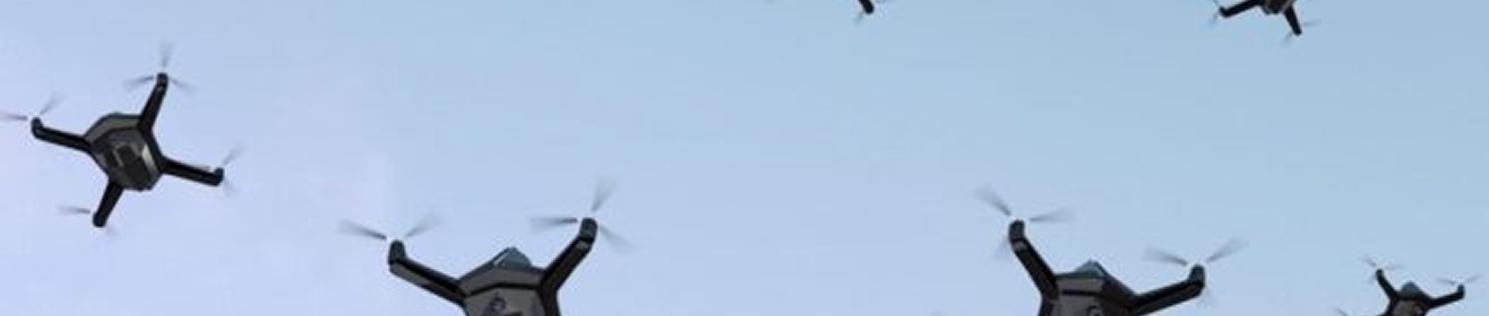
Multi-Agent RL (Swarm Drones)
- Multiple drones can work together as a coordinated swarm, communicating and adapting to one another. This improves:
- Coverage
- Speed
- Efficiency
- Parallel planning activities
- Swarm technology is emerging as a transformative tool for large-scale disaster response.
CNNs for Damage Detection
CNNs are widely used to interpret imagery from satellites, aircraft, and drones. They can:
- Identify buildings
- Classify their damage level
- Highlight affected regions automatically
Projects such as xView and xView2 (supported by the Defense Innovation Unit) focus on automating post-disaster building damage assessment.
The xView2 System
- The dataset includes 45,000+ sq. km of labeled pre- and post-disaster imagery.
Two baseline models were provided:
- Localization Model: based on U-Net for detecting buildings via instance segmentation.
- Classification Model: uses convolution layers (5×5, 3×3, 3×3), max pooling, and dense layers to classify damage into:
Conclusions
Integrating CNNs and Reinforcement Learning into drones can revolutionize disaster response by:
- Providing real-time damage assessments
- Reducing human error
- Speeding up life-saving decisions
- Enhancing planning and resource distribution
These technologies offer a cost-effective, accurate, and life-saving complement to traditional disaster response methods, helping accelerate recovery efforts and reducing overall disaster impact.